
“How do I redirect constant movement in a helpful way?”
“Where do I start?”
“How do you know the exercises are working and targeting the right areas?”
These were some of the questions parents submitted for our Reflex Integration Through Play (RITP) Parent Q&A.
During the discussion, we answered your submitted questions about sitting still, attention, home practice, developmental challenges, and getting the right support.
A message we kept coming back to was this: Look beyond what your child is struggling to do and ask what might be making it difficult.
Here are several of your submitted questions and the guidance we shared.
How do I redirect constant movement in a helpful way?
Before deciding how to redirect movement, we want to understand why your child needs to move.
We look at how the child sits, balances, and coordinates their body, along with the demands of the activity and the environment. In RITP, we consider reflex patterns alongside developmental movement and everyday skills.
For example, a child who struggles to stay at the dinner table may need support with posture, a more suitable seat, movement opportunities, or expectations that better match their age and abilities.
Start by observing:
- Does your child slump, lean, or support their head with a hand?
- Does sitting seem tiring or uncomfortable?
- Is the difficulty greater during meals, homework, or another activity?
- What changes when the activity is enjoyable and engaging?
During the Q&A, we discussed a mealtime example: having conversations while children are eating may work better than expecting them to finish and then sit through a long conversation. Expectations need to match their ages and abilities.
Sometimes we need to adjust the setting and our expectations while also helping the child build skills.
How can reflex integration help my child focus and calm down?
Think about what a task asks your child to do.
Writing involves sitting, keeping the body steady, looking between the page and other information, and controlling the pencil. If parts of that task require a lot of effort, staying engaged may also be difficult.
In RITP, we investigate how reflex patterns, developmental movement, and functional skills relate to those difficulties. We also consider the activity, sensory needs, and other factors affecting participation.
During the Q&A, we used a house analogy. The foundation matters, and a house also needs many other parts working together. Supporting a child requires that same broad view.
We do not assume that one reflex explains every attention challenge. Assessment should connect findings to the daily activities the child needs help with. The American Occupational Therapy Association also recommends that reflex-related interventions have clear links to everyday participation and performance. Read AOTA’s guidance.
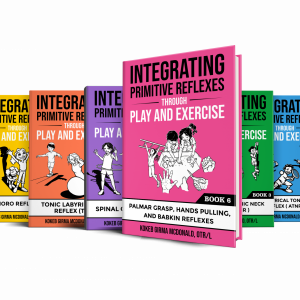
Where do I start if I already have the RITP books?
Start with your child’s everyday challenges and the checklists provided in the books.
Use the checklists to organize your observations. Notice which activities are difficult, what your child avoids, and where they need help. Bring that information to your therapist.
A checklist does not diagnose a retained reflex or establish the cause of a difficulty. It helps you describe what you are noticing and ask more useful questions.
You also do not need to assume that every child should complete every exercise in book order. A therapist can help you select activities that match your child’s abilities and goals.
Choose one meaningful starting point, such as making dressing easier, participating more comfortably at meals, or enjoying playground activities.
How do we know which reflexes are still present or underperforming?
This takes professional assessment and practice.
During the Q&A, our team discussed how much experience goes into recognizing movement patterns. A therapist looks at specific screening tasks and how a child moves during play and everyday activities.
Parents can contribute valuable observations: what feels difficult, when a problem appears, and what helps. Those observations give the therapist information that may not show up during a brief appointment.
The next step is understanding whether a screening finding relates to a difficulty affecting your child’s daily life.
How do you know the exercises are working and targeting the right areas?
Look for meaningful changes in everyday skills.
Depending on your child’s goals, you might notice:
- More comfortable participation at the table.
- Less fatigue during drawing or writing.
- Easier dressing or movement transitions.
- Greater confidence during play.
- Less help needed for a familiar task.
Keep a simple record of the starting point. Describe the task, the support needed, and what makes it difficult. Revisit those same observations with your therapist.
Feedback from teachers and other caregivers can also help. If progress is limited or practice is becoming harder, review the plan together. Changes should be interpreted in the context of your child’s development and any other support they receive.
How can we do the exercises without stressing my child?
One parent shared that their child struggled to tolerate physical exercise. Our discussion focused on understanding the difficulty and adapting the activity.
Ask what your child may be communicating. Is the movement too difficult? Are they tired, uncomfortable, uncertain, or overwhelmed?
Pause when your child shows distress. Your therapist can help change the position, shorten the activity, offer more support, or choose another way to practice.
Play gives us many possibilities. A favorite toy, a familiar game, or doing an activity together may make participation more inviting. Activities still need to suit the child’s abilities, medical history, and any movement restrictions.
Connection, comfort, and manageable challenge guide where we begin.
How can we make practice more engaging, and how should we schedule the movements?
The home program needs to work for your family.
During the Q&A, we discussed how some home programs can fit into approximately 10–15 minutes. The appropriate activities and amount of practice depend on the child; some families may need shorter opportunities.
A few ideas we discussed were:
- Use toys and interests your child already enjoys.
- Join your child in the activity.
- Build practice into an existing routine.
- Ask your therapist how to turn a selected movement into a game.
For a child who comfortably plays on the floor, a puzzle or reaching game may offer a natural opportunity for movement. Your therapist can help connect those activities to the skills you are working on.
Tell us when a home program feels overwhelming. That information helps us make it more manageable.
Is it still possible to work on these skills in a teen?
Parents also submitted questions about teenagers and adult children.
Our team discussed adapting movement activities for different ages. For an older child or adult, we still begin with their current abilities, daily challenges, and personal goals.
Age alone does not tell us which approach will help or what progress to expect. An individual assessment helps guide that decision.
Include your teen in the conversation. Ask what they would like to find easier and what kinds of movement they enjoy.
What if my child has developmental delays or needs help with communication?
Some submitted questions involved significant movement delays, autism, and language difficulties.
These concerns call for coordinated support. Share developmental concerns with your child’s healthcare provider and ask about appropriate evaluations and services. In the United States, families with children younger than three can also contact their state’s early intervention program directly. See CDC guidance for families.
For communication concerns, a speech-language pathologist can assess your child and help identify useful supports.
Home movement activities should fit alongside your child’s care plan. Ask the team which playful activities you can use within the routines you already have.
How do I manage meltdowns and defiant behavior?
Start by asking what may be happening beneath the behavior.
A child may be struggling to communicate, finding a task too difficult, experiencing discomfort, or becoming overwhelmed. We need to investigate rather than assume a single cause.
Notice what happened before the difficulty, what the child seemed to need, and what helped them recover. Share those patterns with your care team.
Understanding the child’s experience helps us choose more appropriate support.
Get support for your next step
You may have books, exercises, and plenty of information but still need help deciding what applies to your child.
Through RITP Parent Support, we help families understand their concerns and develop practical home activities suited to their child. An initial consultation is an opportunity to discuss your questions, consider next steps, and determine whether our support fits your family.
Thank you to the parents who submitted questions. Your observations and questions help us keep these conversations focused on what matters in your everyday life.
For Parents
Understand your child’s challenges and get personalized guidance and practical support for home.
Learn more | Book a consultation
RITP Certification for Professionals
Build confidence connecting reflex patterns, developmental movement, and everyday skills to create effective treatment plans.
Explore certification | Book a call