
This is Part 7 of the Creating an At-Home Program series. Please refer to Parts 1-6 in episodes 39-44 of the RITP podcast if you have not had a chance to review.
We’ve learned about retained reflexes like the ATNR reflex and Spinal Galant reflex. We’ve discovered how primitive reflex integration exercises can support a child’s development, and we’ve even started integrating RITP exercises at home. Now, there’s one crucial step that brings it all together: tracking progress and maintaining effective parent-therapist collaboration.
Why Tracking Matters for Reflex Integration Therapy
When addressing developmental delays in children through reflex integration through play, consistent observation helps you spot improvements in gross motor skills development, fine motor skills activities, and signs of retained reflexes in children. Without tracking, it’s easy to miss the small wins that signal your child is making real progress.
Think about it: if a child struggled with the asymmetric neck reflex last month but now crosses midline more easily during a reflex game, that’s meaningful progress. When the Babkin reflex integration shows improvement, it often correlates with better hand-eye coordination and self-feeding skills. However, these connections only become clear when tracked consistently.
Simple Methods for Observing Child Development at Home
When addressing developmental delays in children through reflex integration through play, consistent observation helps you spot improvements in gross motor skills development, fine motor skills activities, and signs of retained reflexes in children. Without tracking, it’s easy to miss the small wins that signal your child is making real progress.
Think about it: if a child struggled with the asymmetric neck reflex last month but now crosses midline more easily during a reflex game, that’s meaningful progress. When the Babkin reflex integration shows improvement, it often correlates with better hand-eye coordination and self-feeding skills. However, these connections only become clear when tracked consistently.
Strengthen Communication With Pediatric Occupational Therapists
For parents working with pediatric occupational therapists, observations become invaluable. Share videos showing your child’s response to exercises. Note patterns in sensory processing challenges or improvements in reflex integration.
A transparent partnership accelerates results. Therapists can adjust reflex integration exercises based on real-world data, while parents gain confidence implementing home reflex therapy routines between sessions.
Celebrate Every Milestone in RITP
From mastering the Romberg test to showing improved asymmetric reflex responses, celebrating achievement builds confidence and motivation for a child. RITP offers templates and guides to make tracking effortless, helping parents see how reflex therapy benefits a child over time.
Remember: patience, love, and commitment make reflex integration therapy effective. Consistent tracking turns daily play into measurable developmental progress.
✨ Try the RITP App for a free 3-day trial.
📚 Learn more and explore resources at ritp.info/shop
🎧 Listen to episode 45 and the final episode in the series to understand how tracking progress and communicating effectively ties your entire at-home reflex integration program together for lasting results.
And don’t forget to check out the RITP App for step-by-step guidance and progress tracking.
Episode Breakdown:
00:00 Introduction to the Final Episode
00:41 The Importance of Tracking Progress
00:49 Effective Communication with Therapists
01:07 Simple Record-Keeping Tips
01:56 Using Visual Tools for Motivation
02:30 Recording Videos to Track Growth
03:56 Sharing Updates with Your Therapist
05:11 Celebrating Milestones
05:40 Key Takeaways and Final Thoughts
06:22 Closing Remarks and Resources
Special Event – RITP 3-Day Intensive
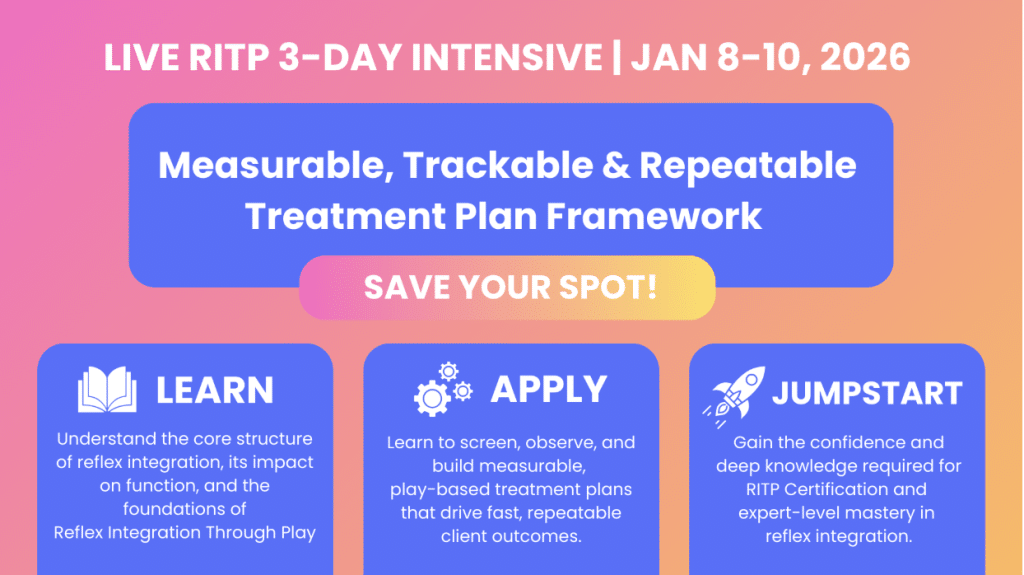
The 3-Day RITP Intensive is a live, hands-on training with Kokeb McDonald that teaches you the full RITP framework in just three days.
Earn AOTA-approved CEUs, get practical screening tools, and learn how to create effective, play-based treatment plans you can use immediately in your practice.
Perfect for pediatric therapists ready to elevate their approach and support kids with more confidence and clarity.
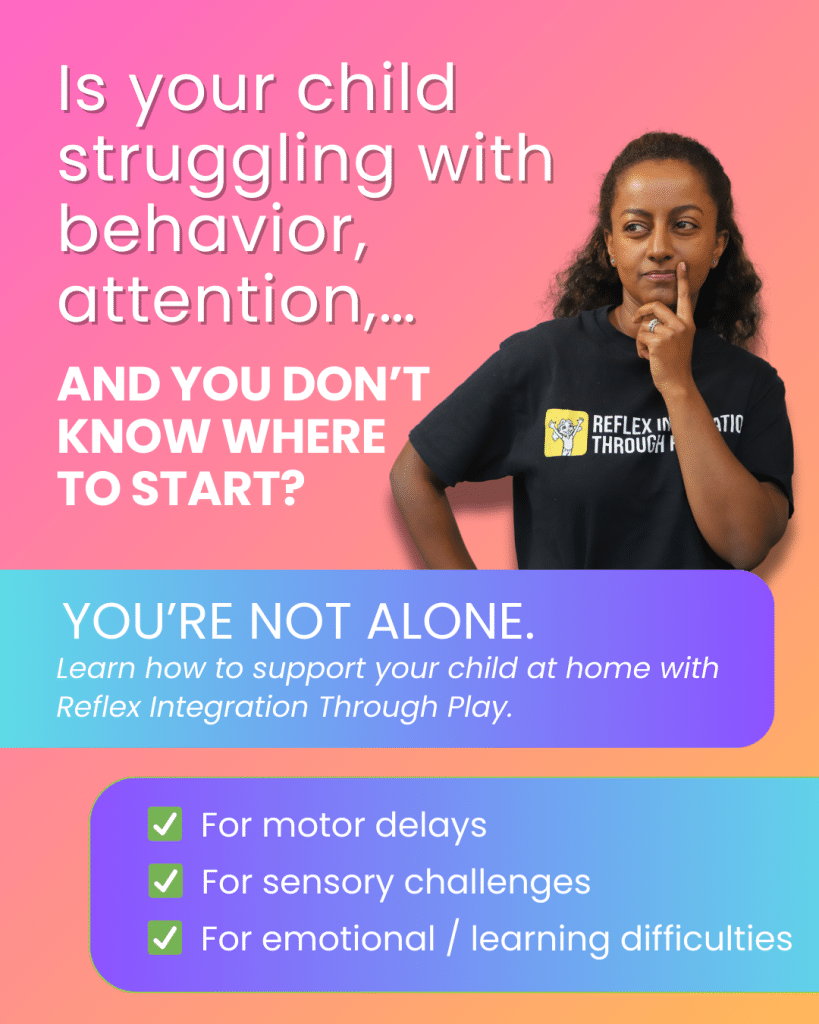
Parents: Are you tired of daily struggles with focus and attention, homework meltdowns, or motor delays?
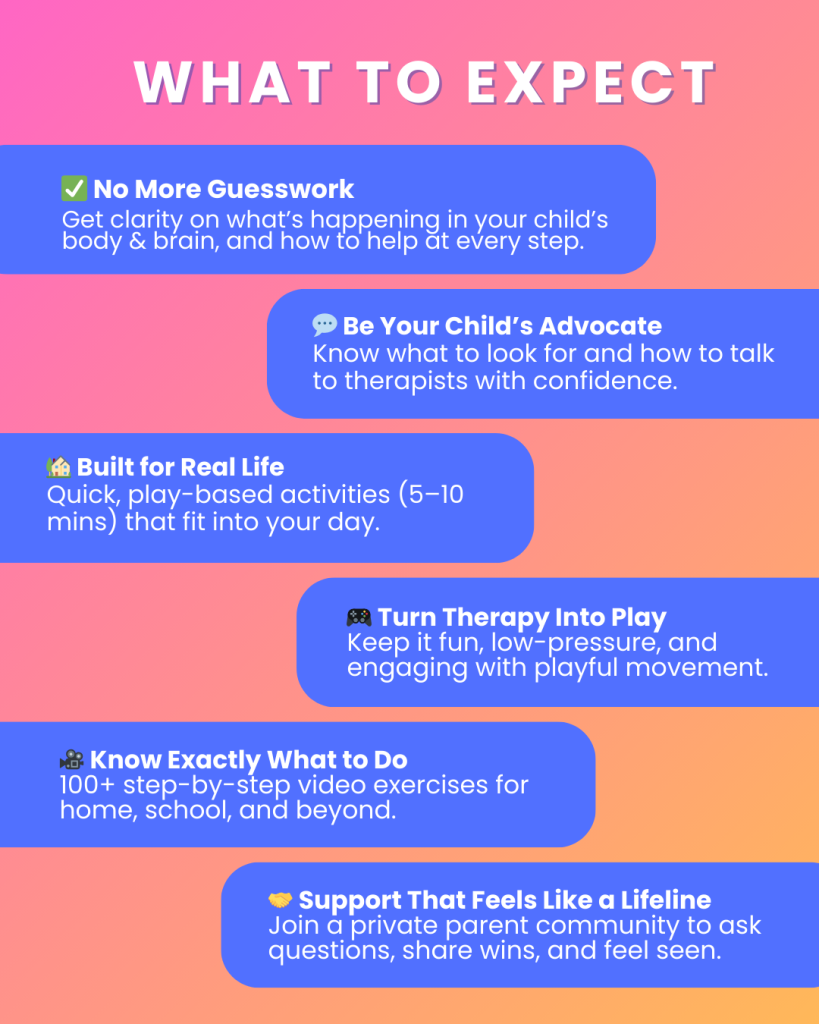
RITP for Parents helps kids move better, focus longer, and feel calmer — all through simple, play-based exercises that fit into real life.

Reflex Integration Through Play at School
Transform Learning and Sensory Regulation Through Play-Based Movement